
Erlend Øyan, a professional guide born and raised in Grünerløkka, takes you on a journey through the neighborhood’s rich history. In this guide, he highlights key stories and landmarks that history enthusiasts will find particularly fascinating.
Key takeaways
- Get to know the history of the about 1 km2 Grünerløkka neighborhood from 1850.
- Nedre Foss Gård – Historic estate by Akerselva, today a landmark restaurant area.
- Gamle Aker Church – Oslo’s oldest standing building (12th century).
- Nybrua & Krohg Monument – Symbol of Norway’s political independence.
- Grünerløkka Library (1914) – Norway’s first purpose-built public library.
- Birkelunden Park & Heritage Area – Nationally protected working-class housing.
- Edvard Munch’s former home – Where he painted The Sick Child.
You will find a map accompanying this article here.
For travelers planning a trip to Norway’s capital, the borough of Grünerløkka have always been a must-see. Its unique charm and historical architecture attracts visitors from all over the world. But with all places with a rich heritage, there was of course a yesterday; a time before, that shaped the present. Grünerløkka (Løkka amongst locals) is no exception.
It all startet by the river
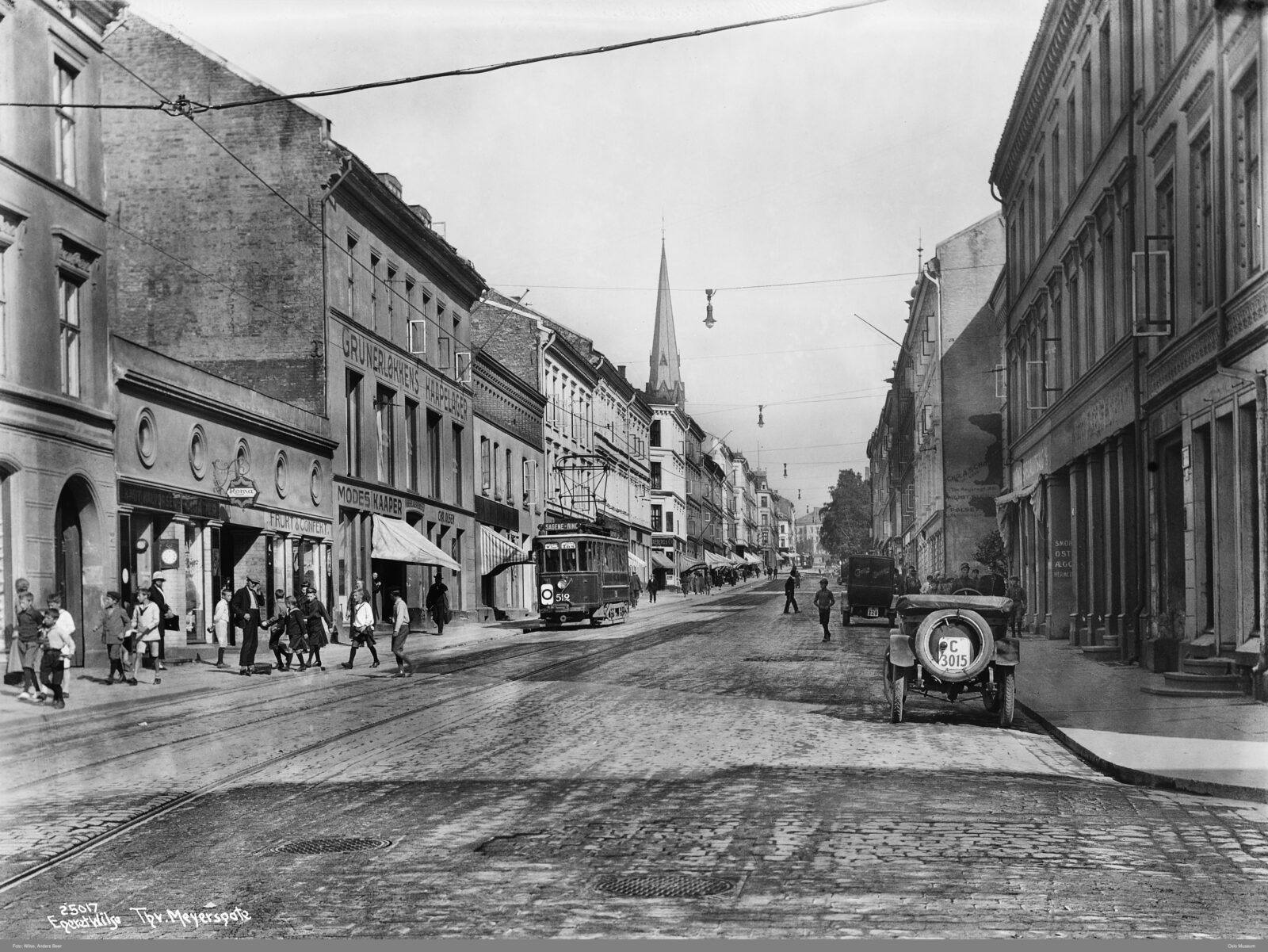
The central part of Løkka – including the main streets of Markveien and Thorvald Meyers gate, surrounding cross streets, squares and parks – mostly date from the second half of the 1800’s. This is when the industrial revolution really took hold in Norway, and its epicenter was along the Akerselva river.
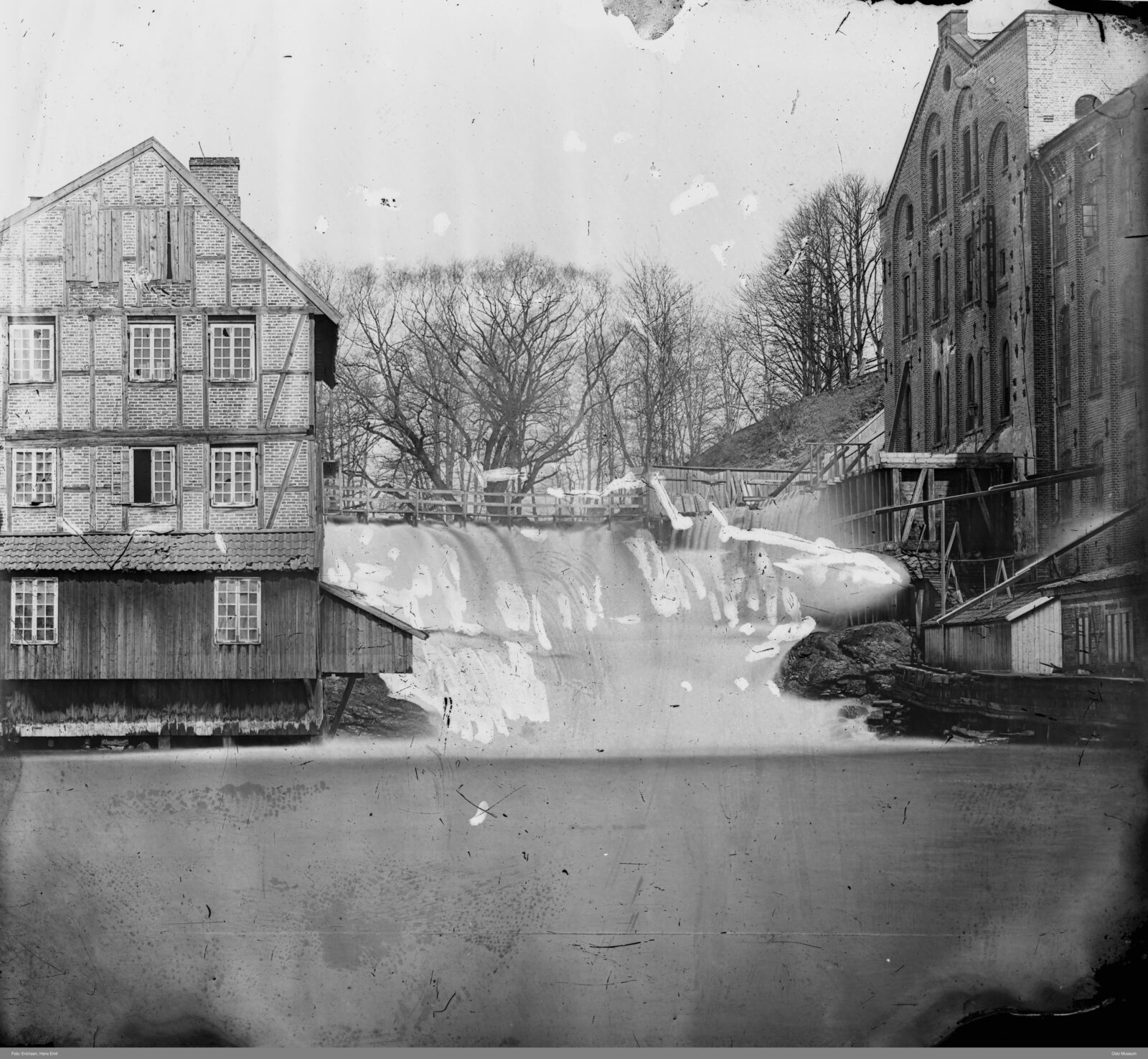
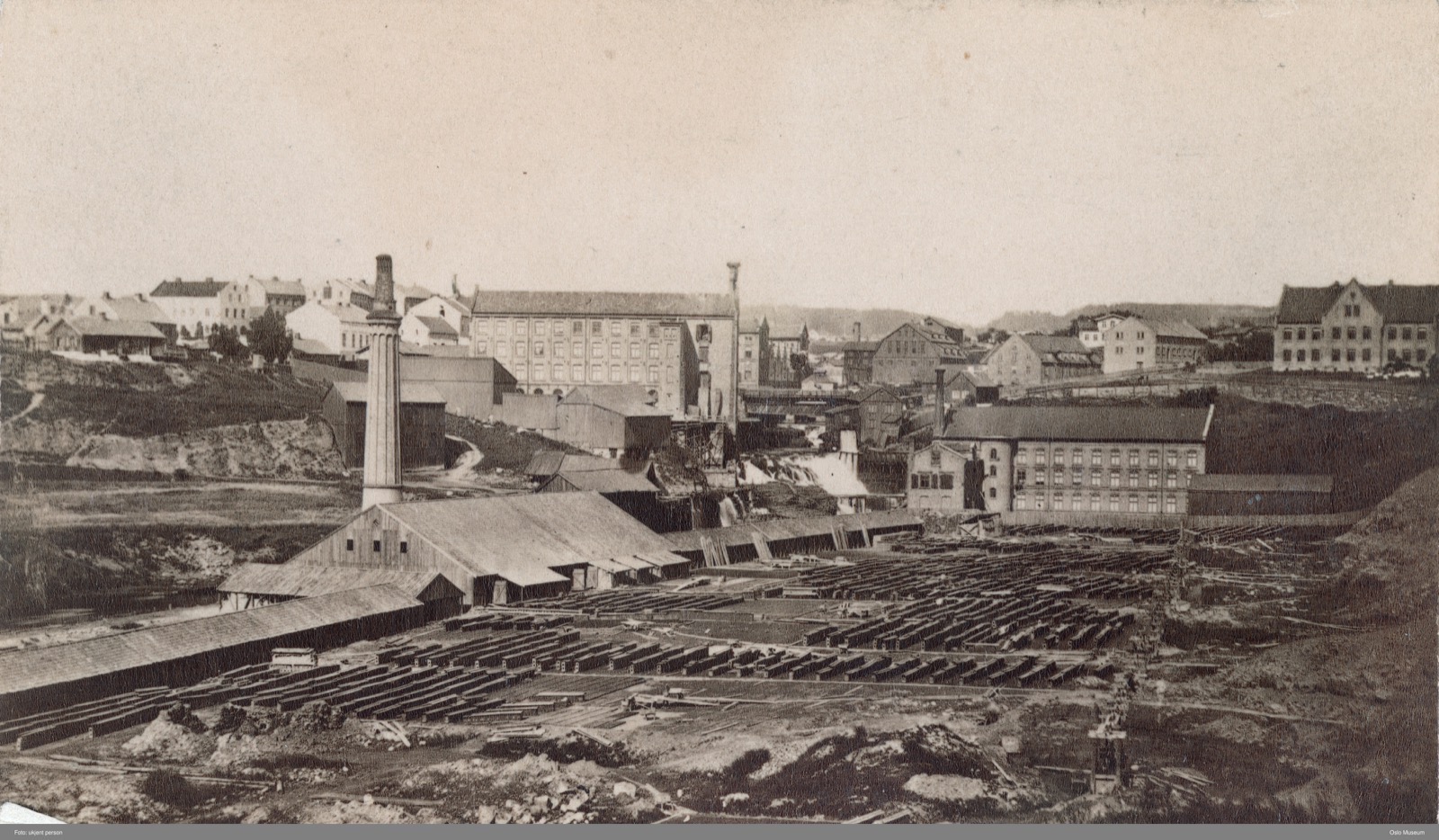
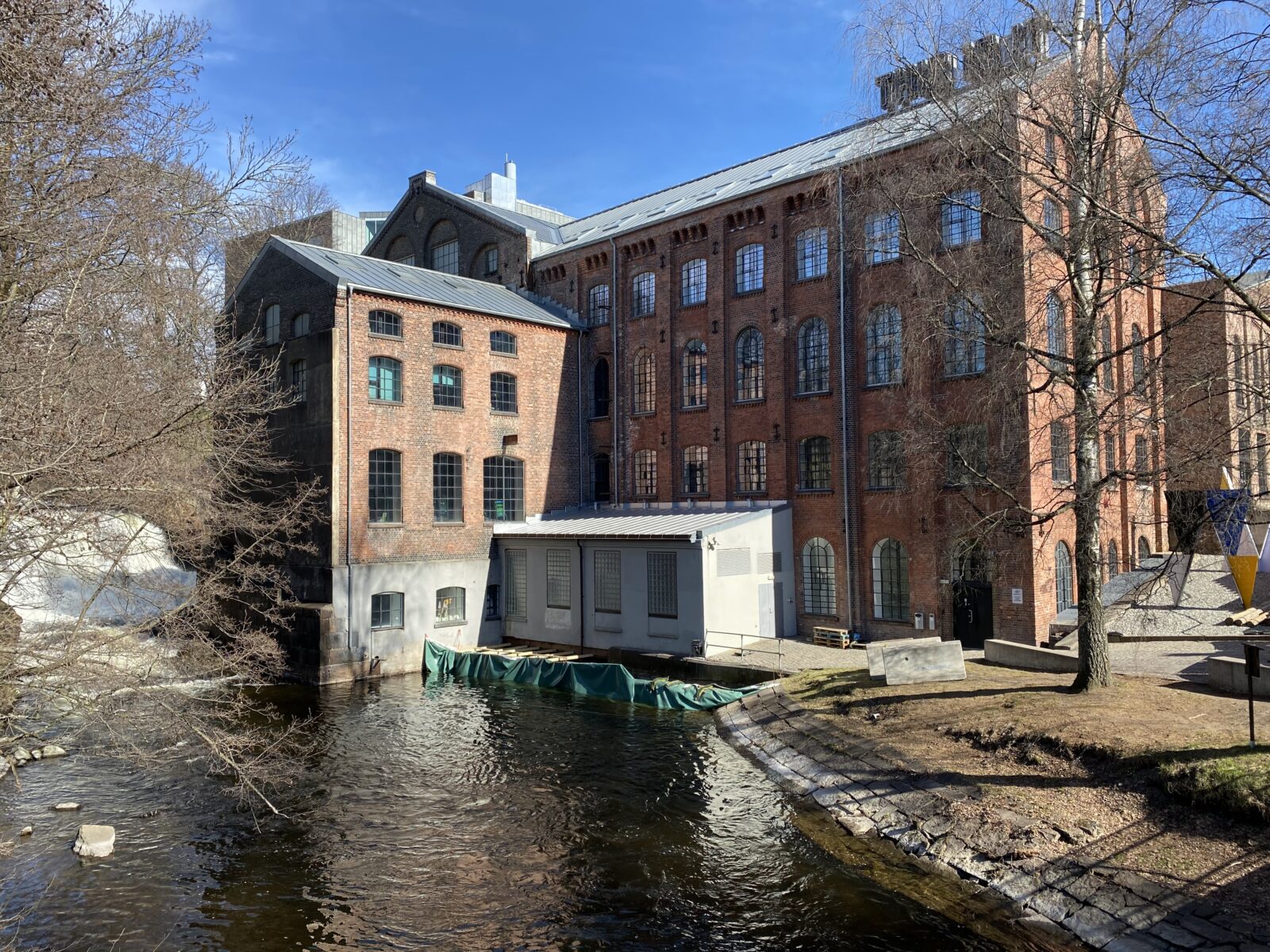
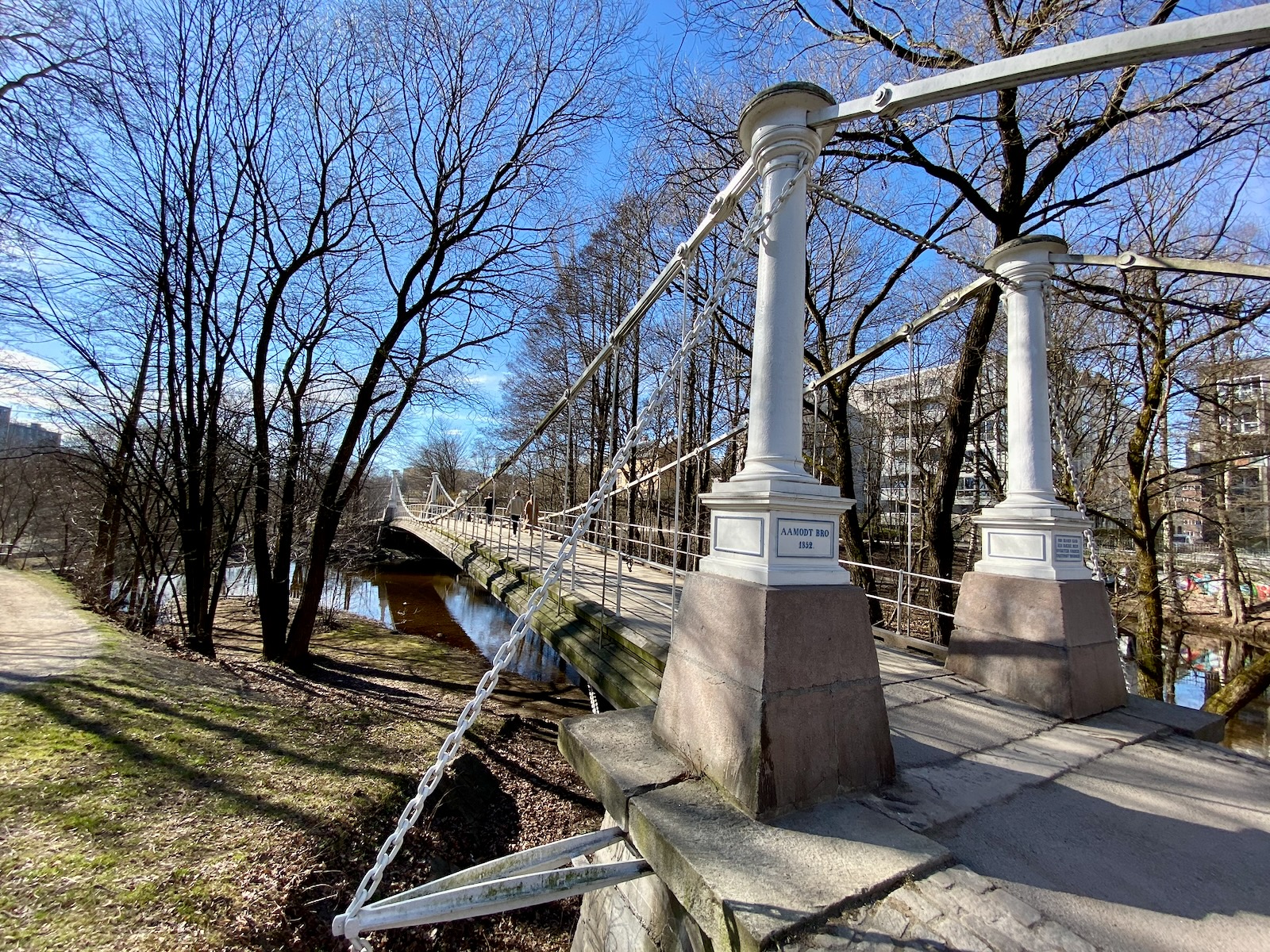
Akerselva is considered Grünerløkka’s western border and the traditional divide between east and west in Oslo. As factories sprung up along the river, utilizing its many waterfalls for energy, people moved in from the countryside to work here. Back then, public transport was pretty much non-existent. Workers had to live within walking distance to their workplace. That is, in short, how central Grünerløkka came into being.
Prior to this, farms, fields and mills dotted the landscape of Grünerløkka. Several of these farms still exist, even the one that gave Grünerløkka its name, all the way back in the 1670s. Nedre Foss Gård, located at the last of Akerselva’s waterfalls, (hence the name, meaning Lower Falls), is mentioned in written accounts all the way back to medieval times. It was sold by King Christian V to Friedrich Grüner – mintmaster at the Mint in Christiania, around 1672. With the property came a large fenced off area, in Norwegian known as “løkke”. And so, it became Grüners Løkke.
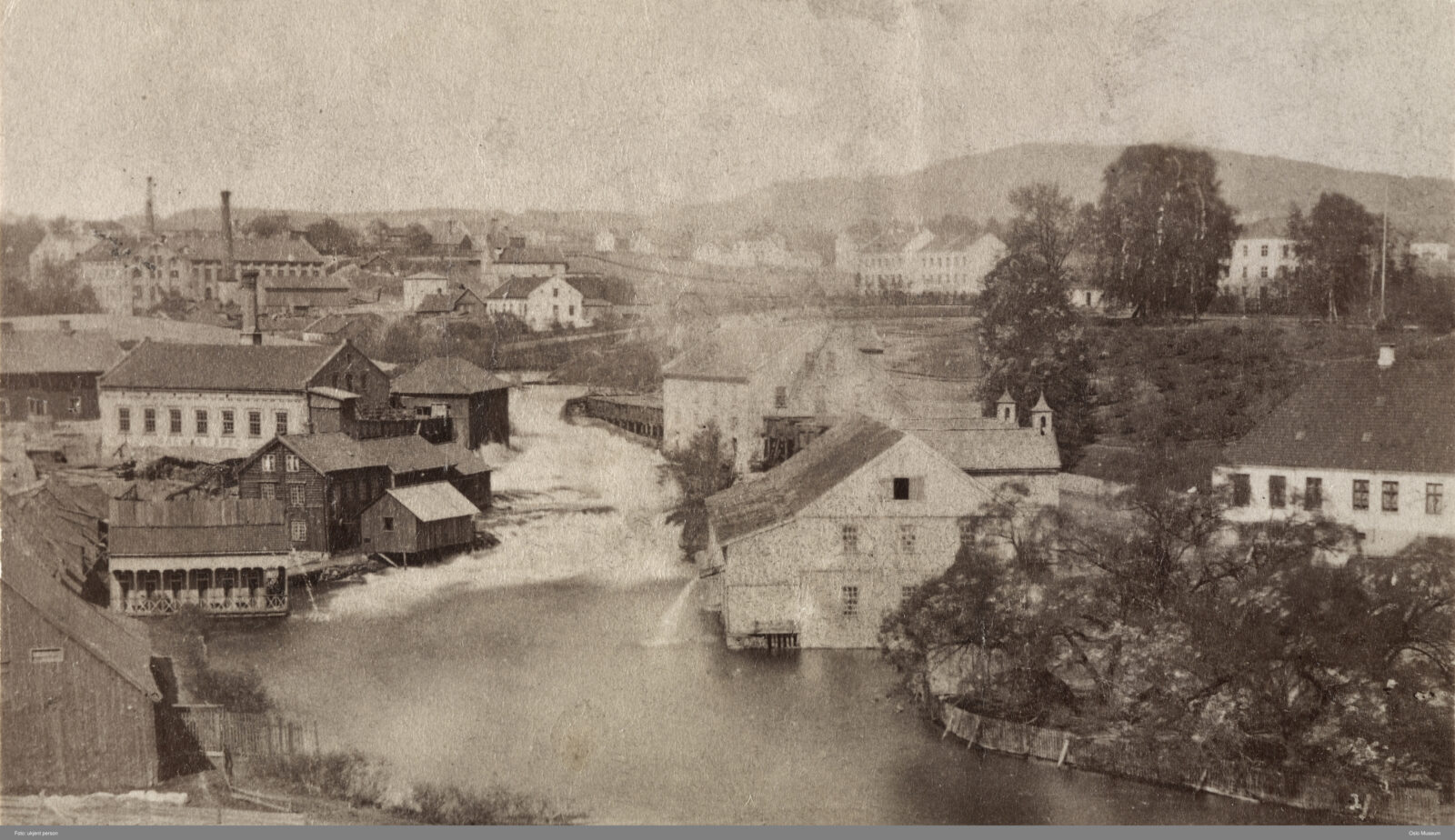
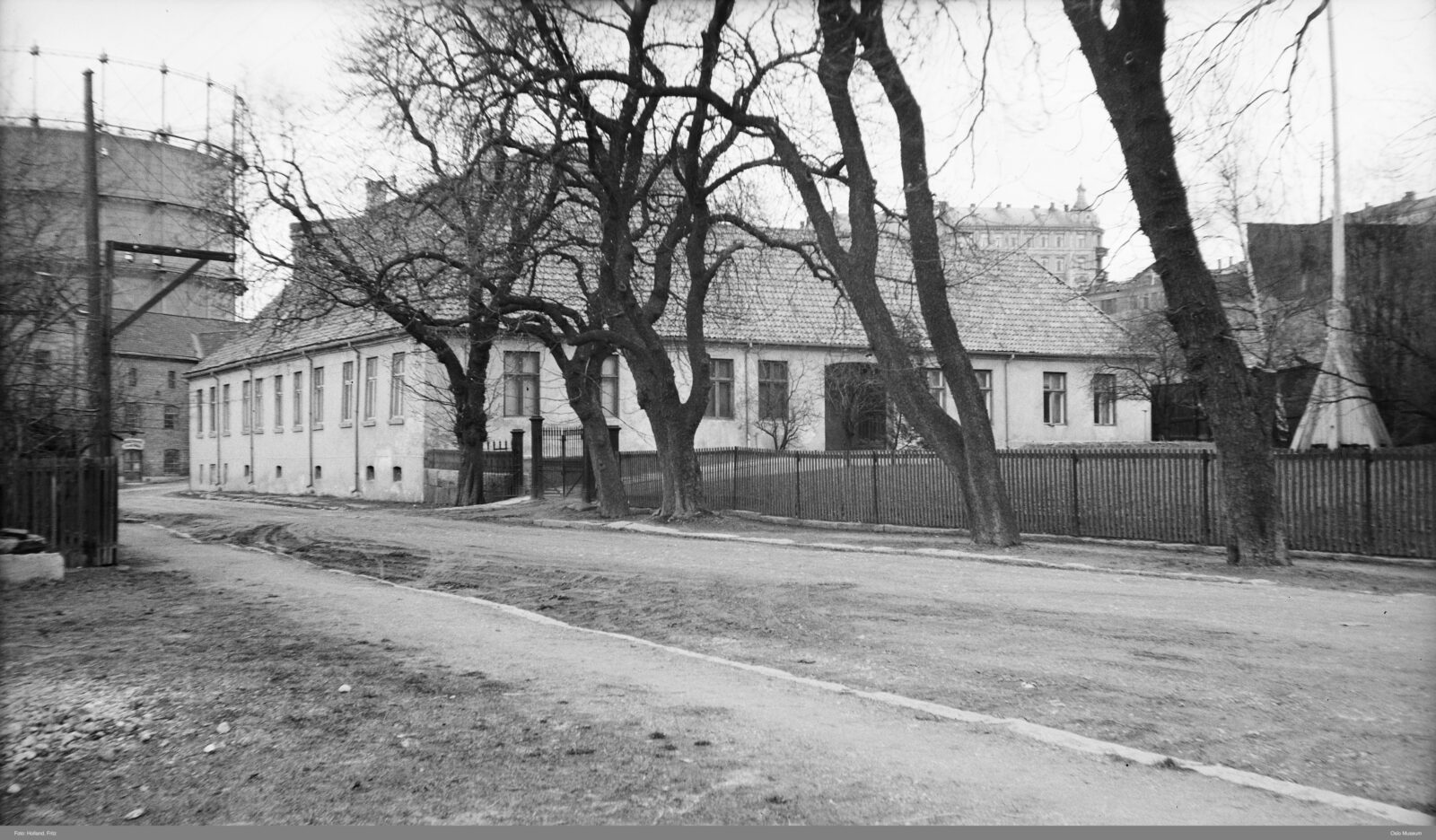
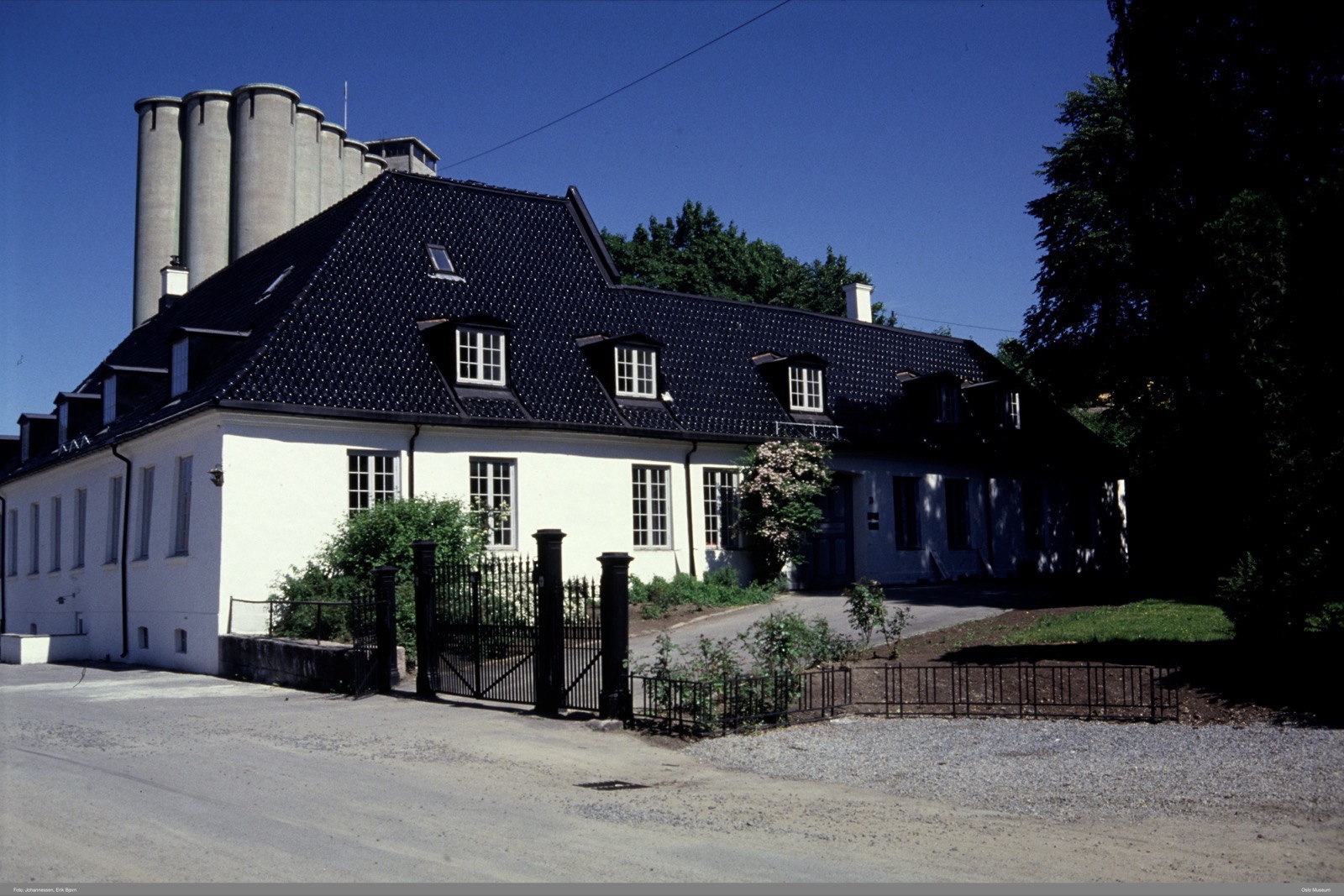
Today, Nedre Foss Gård is one of Oslo’s most beautiful restaurants and it has been meticulously renovated to its former glory. The current building dates from the early 1800’s but is most likely built on foundations much older. Its immediate surroundings form a village-like area within Grünerløkka, featuring the river and the parks – which were once its gardens. Mathallen food court is just across the bridge. Make sure you don’t miss it!
You can read more about todays Akerselva in the article: Akerselva – a river walk in the city
Oslo’s oldest
While in that area, you’re just a short, but steep walk away from not only Løkka’s, but Oslo’s oldest standing structure. Up the steep, village-like street Telthusbakken, flanked by old wooden houses and allotment-gardens, lies Gamle Aker church. It was built in the 1100s and remains mostly intact, apart from the tower which was rebuilt in the 1800s.
Often referred to as the best example of Romanesque architecture in all of Norway, it is definitely a must-see for all history buffs visiting Oslo. Written sources tell of silver mines here dating back almost a millennium. Legend has it that the church stands on four pillars of gold within the hill it rests on. Between the pillars is a small pond where solid gold ducks swim and of course they are all guarded by a fearsome, but for now, sleeping dragon!
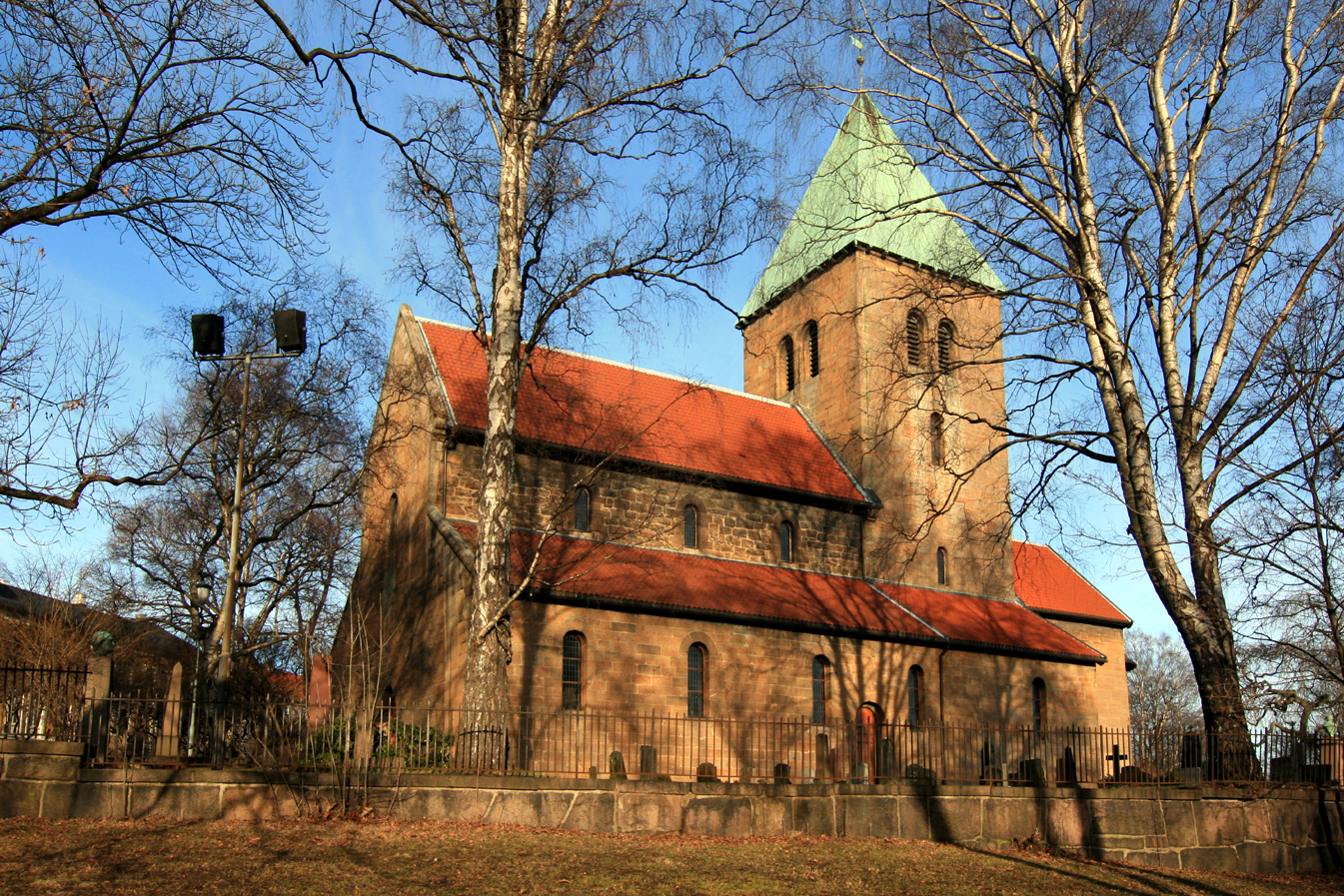
Technically it’s not in Grünerløkka proper, but with its age and close proximity it deserves to be included in our guide. A nice bonus is it gives you the best view of Grünerløkka, which can be found just behind the church in its peaceful, old cemetery.
Also found on the exterior of the church is an intriguing piece of ornamentation. At knee height on the sacristy, the rounded part of the wall in the northeast corner, you can see what appears to be just a band. But look closer, you will see that the “band” is actually a worm biting its own tail. In norse mythology this is “Midgardsormen”, the ferocious sea-serpent encircling the entire world. For the builders to include something like this, when Norway had been christian for a century and a half, is honestly quite mesmerizing. Could it be they were hedging their bets, religiously speaking?
A political statement
If you make your way to Grünerløkka from the city center, the easiest way is by tram. Lines 12, 15 and 18 all run through Grünerløkka’s main thoroughfare. The following stops- Schous plass, Olaf Ryes plass and Birkelunden, all land you right in the heart of Løkka. But if you get off at Nybrua, before Schous plass, there’s another historical gem to discover. Nybrua, meaning new bridge, is actually almost 200 years old. When it opened, around 1827, it quickly became the main entrance to Christiania – Oslo’s old name, when arriving from the north.
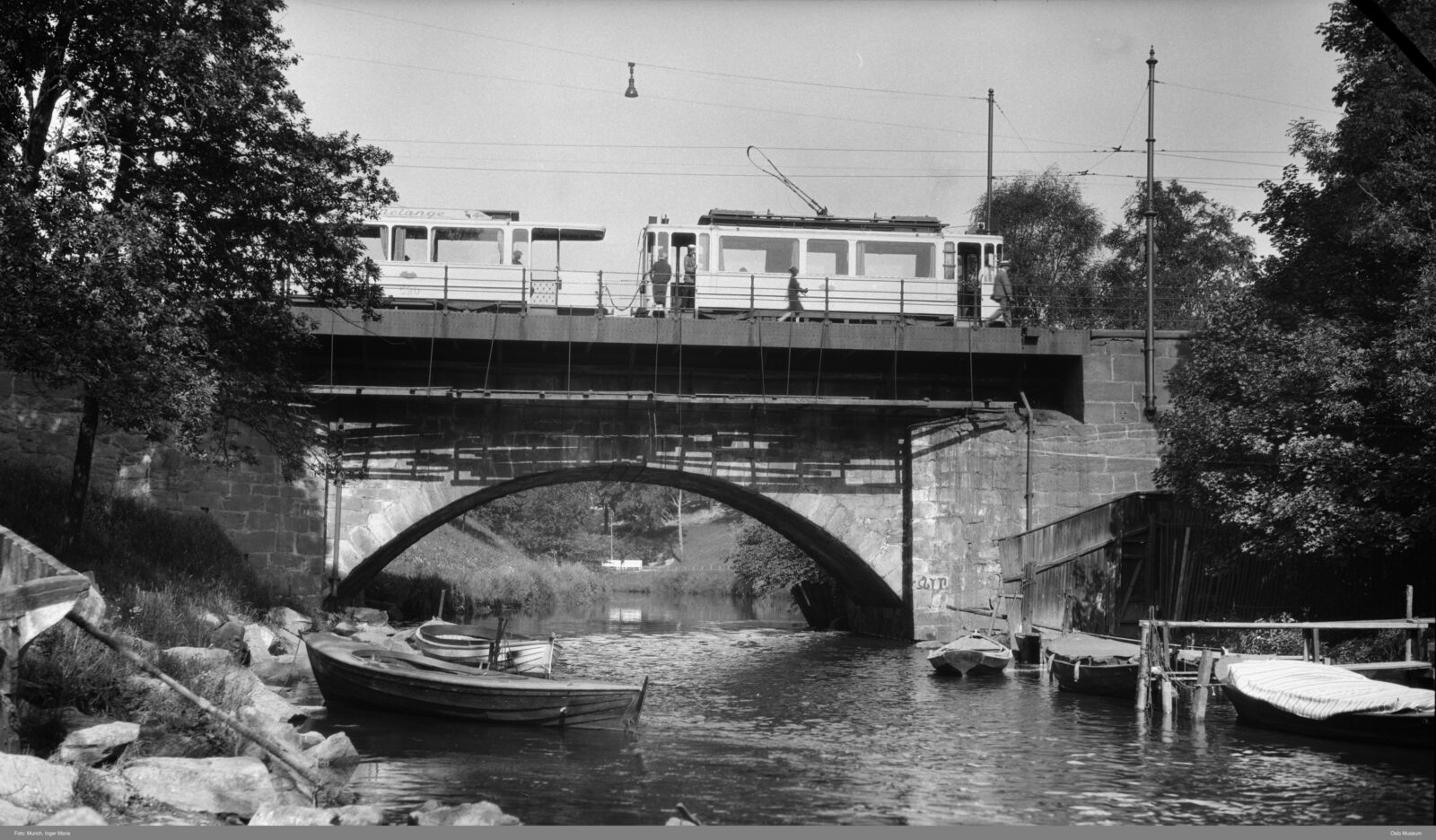
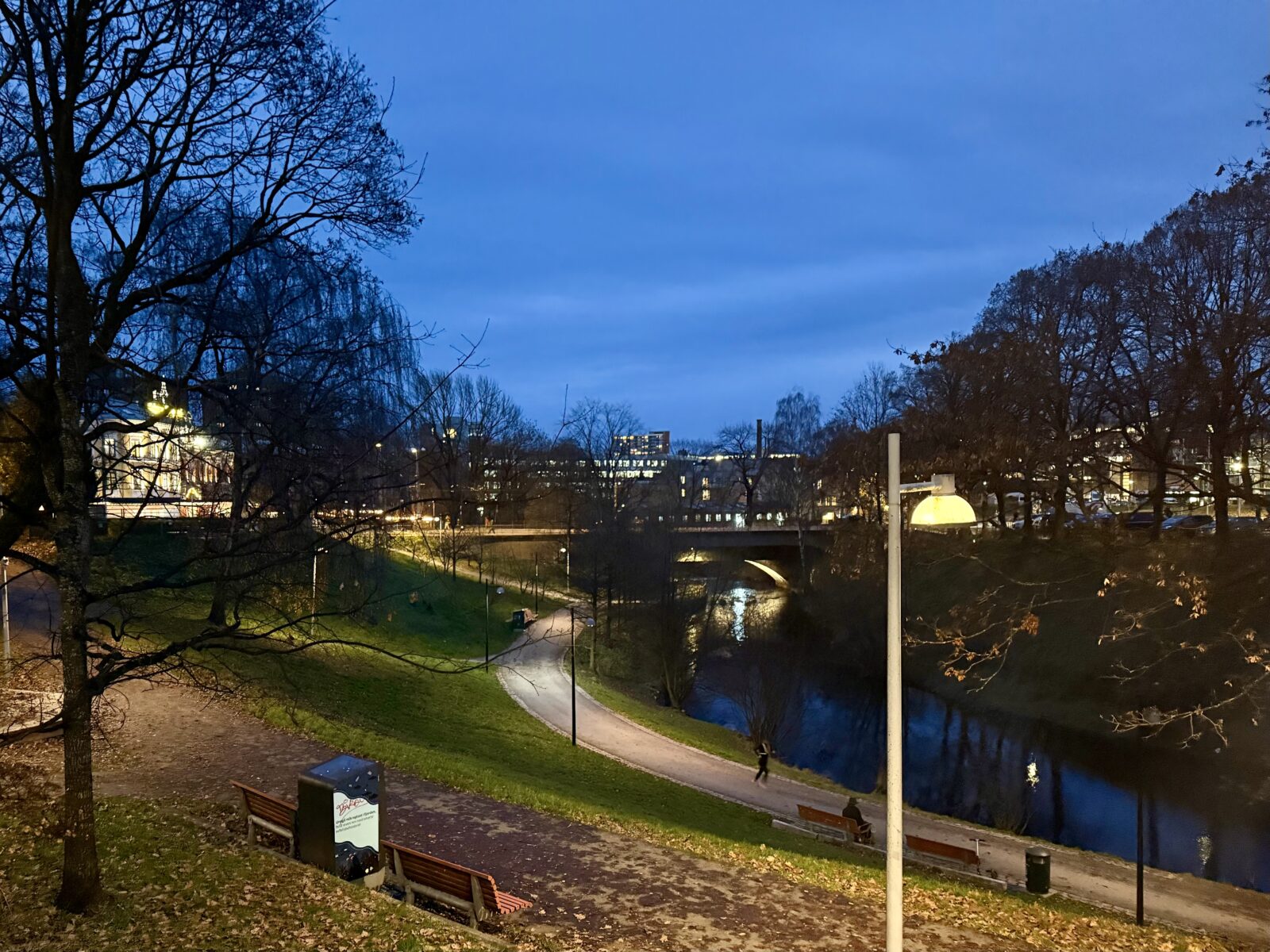
At this time, Norway had recently entered into a personal union with Sweden, meaning that the king of Sweden was also king of Norway. King Karl Johan had for some time tried to change the Norwegian constitution of 1814, in short, to limit parliament’s power and grant him more. In 1824, all of his suggestions to make these changes were thoroughly rejected by the president of the parliament, Christian Krohg.
This man was therefore honored with one of the very first personal monuments in Norway, an obelisk right on the southern side of the bridge. For King Karl Johan, who was obliged to visit the capital of his “junior” kingdom from time to time, this must surely have been a bitter reminder that the Norwegians were stubborn people. Their love and admiration had to be earned!
A temple of knowledge
As tenement housing sprung up all over Christiania (Oslo), Grünerløkka quickly became a distinct working-class area. Living conditions were poor, apartments were cramped and privacy was a luxury. But with this growth there also came movements, new ideas, and the belief that everyone should be given the chance to rise above their social standing. In Grünerløkka, this manifested itself in the very first purpose-built library in all of Norway.
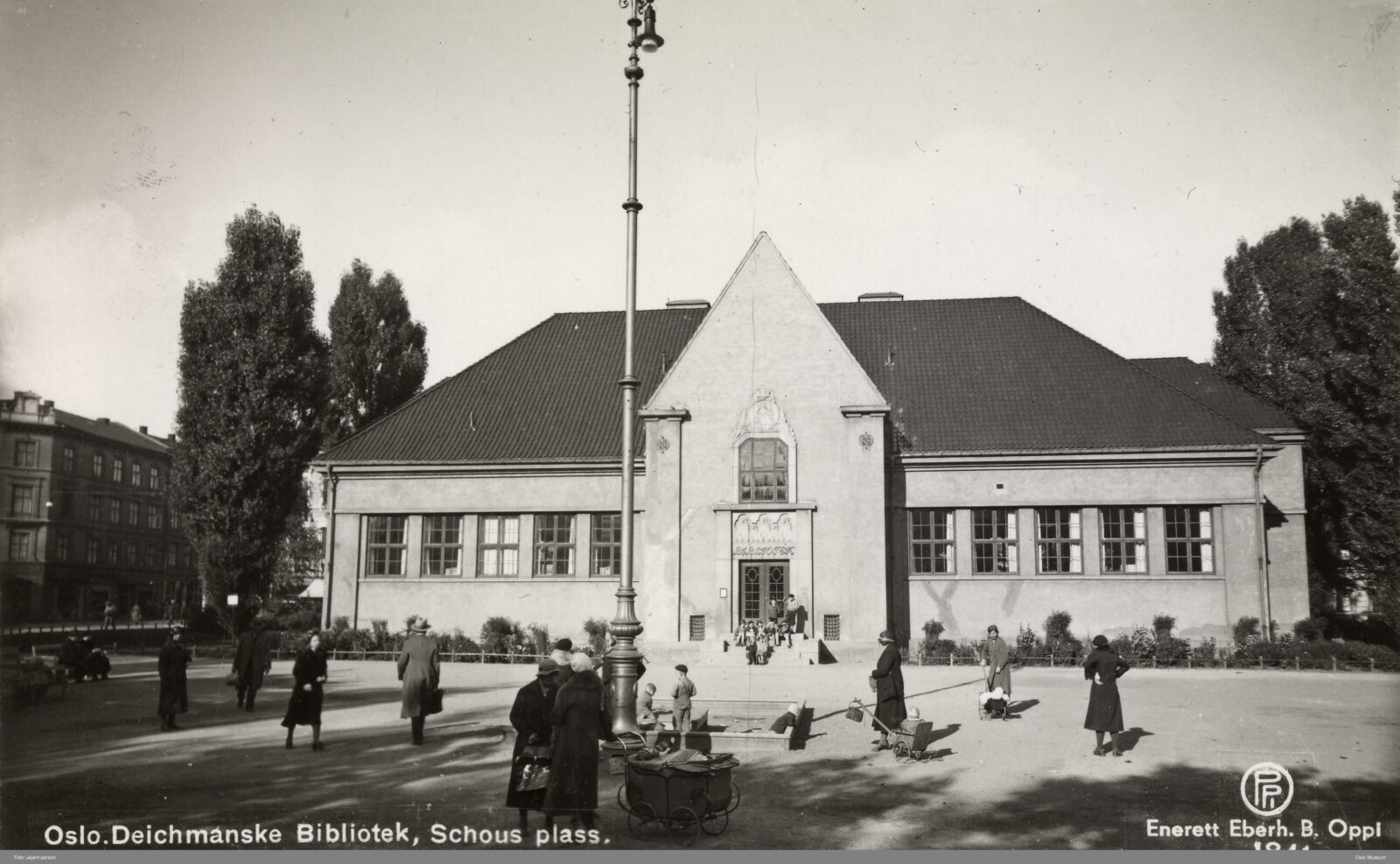

The palace-like building can be found in Schous plass and has served knowledge, culture and enlightenment to the locals since 1914. It is telling that just eight months after opening, this library had lent out more than 100.000 books. That’s more than the entire city of Trondheim that same year! Today, the library remains a focal point for literature and cultural events. A host of events takes place annually, from baby-library and comics-workshop, to cooking classes and children’s theater. During the summer there are outdoor cinemas as well as the popular Oslo Comics Expo. But most of all, for more than a century, the library is a gathering place; a quiet, book-filled living room in a world that’s moving a bit too fast.
Edvard Munch
By far Norway’s most famous painter is Edvard Munch (1863-1944). In Oslo, the great expressionist has both his very own museum in Bjørvika, and is featured heavily in the National Museum downtown. Like so many others, his family moved from the countryside to the rapidly growing capital in the 1860’s. In 1875 they moved to Grünerløkka and lived in various locations here over the next fourteen years. Their last residence was just across the street from the library and is where Munch painted what is regarded as his breakthrough piece, “The Sick Child”.
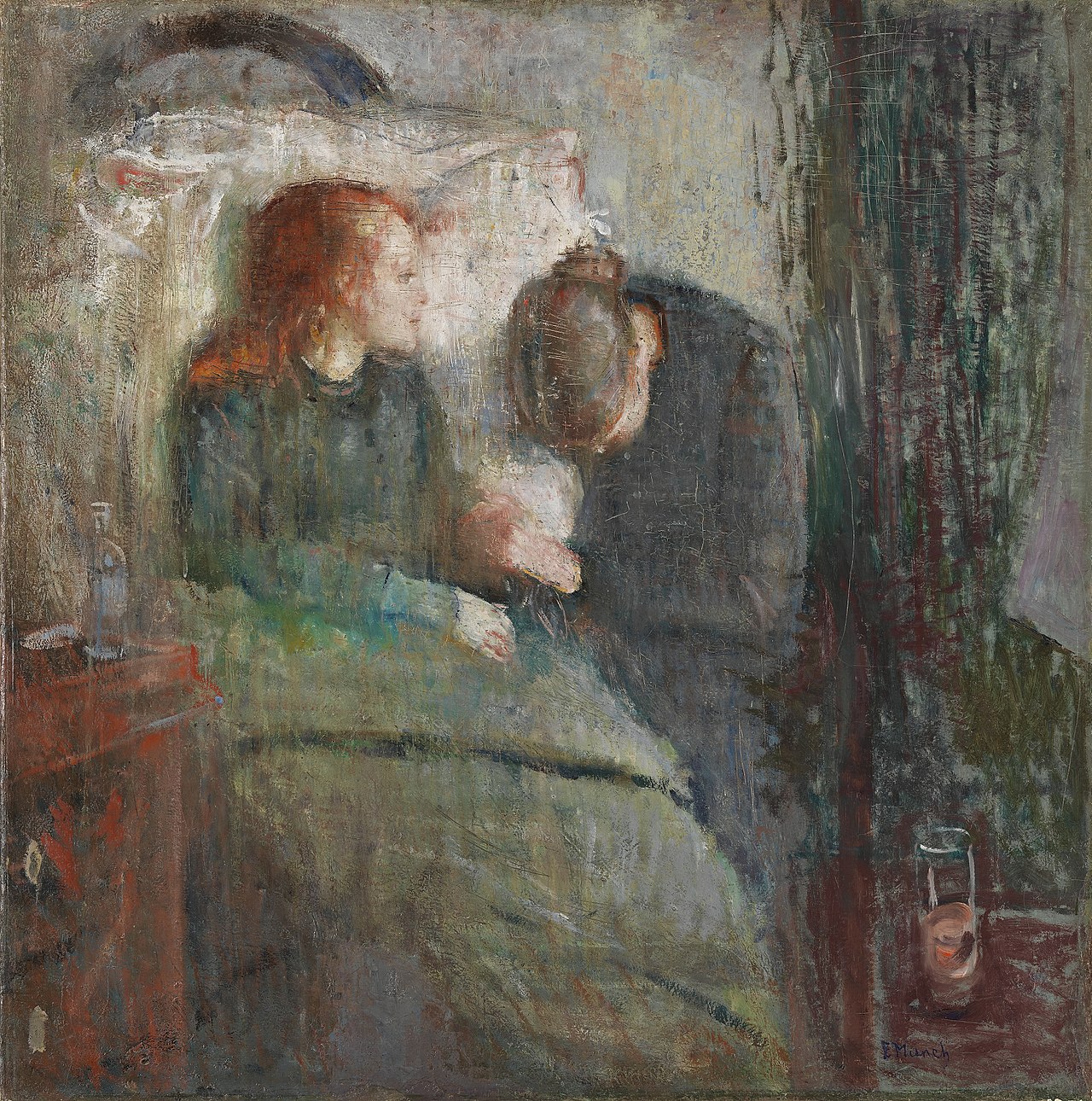
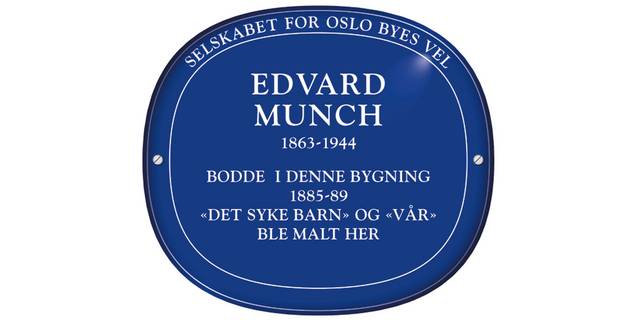
The painting is believed to depict Sophie, Munch’s sister, who died of tuberculosis in 1877. Today it is not only one of his most famous pieces but also a testimony to the harsh conditions and fragility of life in the city, in a not-so-distant past. To find the exact building, look above the coffee shop just behind the library. A blue plaque commemorates his stay and creativity during his formative years in Grünerløkka.
Blue-plaque safari
As in many cities around the world, historical sites in Oslo are often commemorated with a blue plaque. These plaques, which originated in London in the 1860s, are usually found on buildings where famous people have lived or worked. They also tell of places with industrial or cultural significance or heritage. As one would expect, there are quite a few of them in Grünerløkka, and finding them can be a great way to explore the borough. Therefore, in no particular order, here are a few of the more interesting ones. Why not see if you can find them all? That way, you’ll walk streets you might not otherwise and also learn a bit of history on your way! You’ll find them in the accompanying map.
- Søndre gate 8 – Women’s right to vote.
- Markveien 35 – Gestapo ambush on Norwegian resistance fighters.
- Fossveien 24 – The birthplace of an industrial giant.
- Olaf Ryes Plass 16 – Parkteatret, the legendary concert hall.
- Sars gate 1 – Tøyen Hovedgård (Manor). Today the Natural History Museum and Botanical Garden.
- Øvre gate 7 – Kristiania Kunst & Metalstøberi (Art & Metal Foundry)
Protected urban cultural environment
On April 28th 2006, Grünerløkka’s historical significance was recognized on a national level. That date marked the first time in Norwegian history that an entire urban cultural environment was granted protective status. The area includes Birkelunden park, Paulus church, Grünerløkka school, and fifteen surrounding city blocks with a total of 139 apartment buildings. It is the largest such protected area in Norway, and was given this status as it exemplifies the residences of the working class at the height of industrialization.
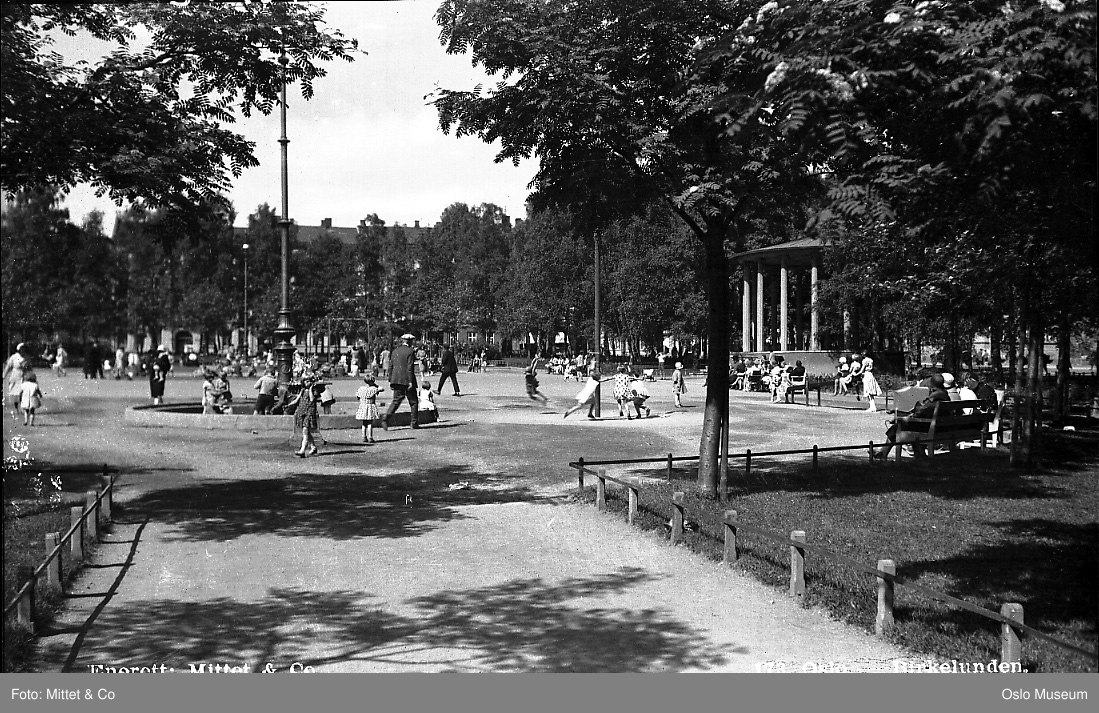
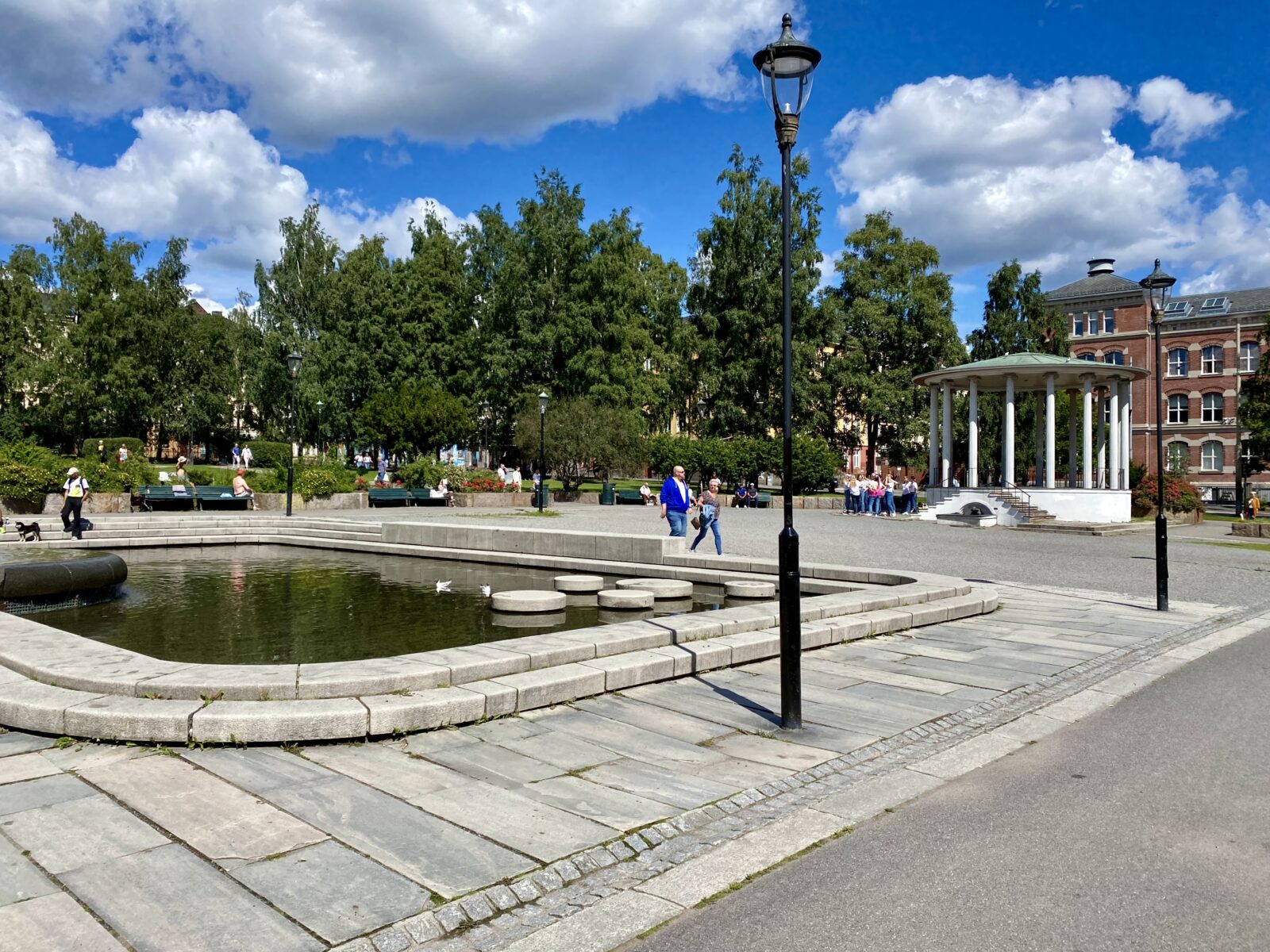
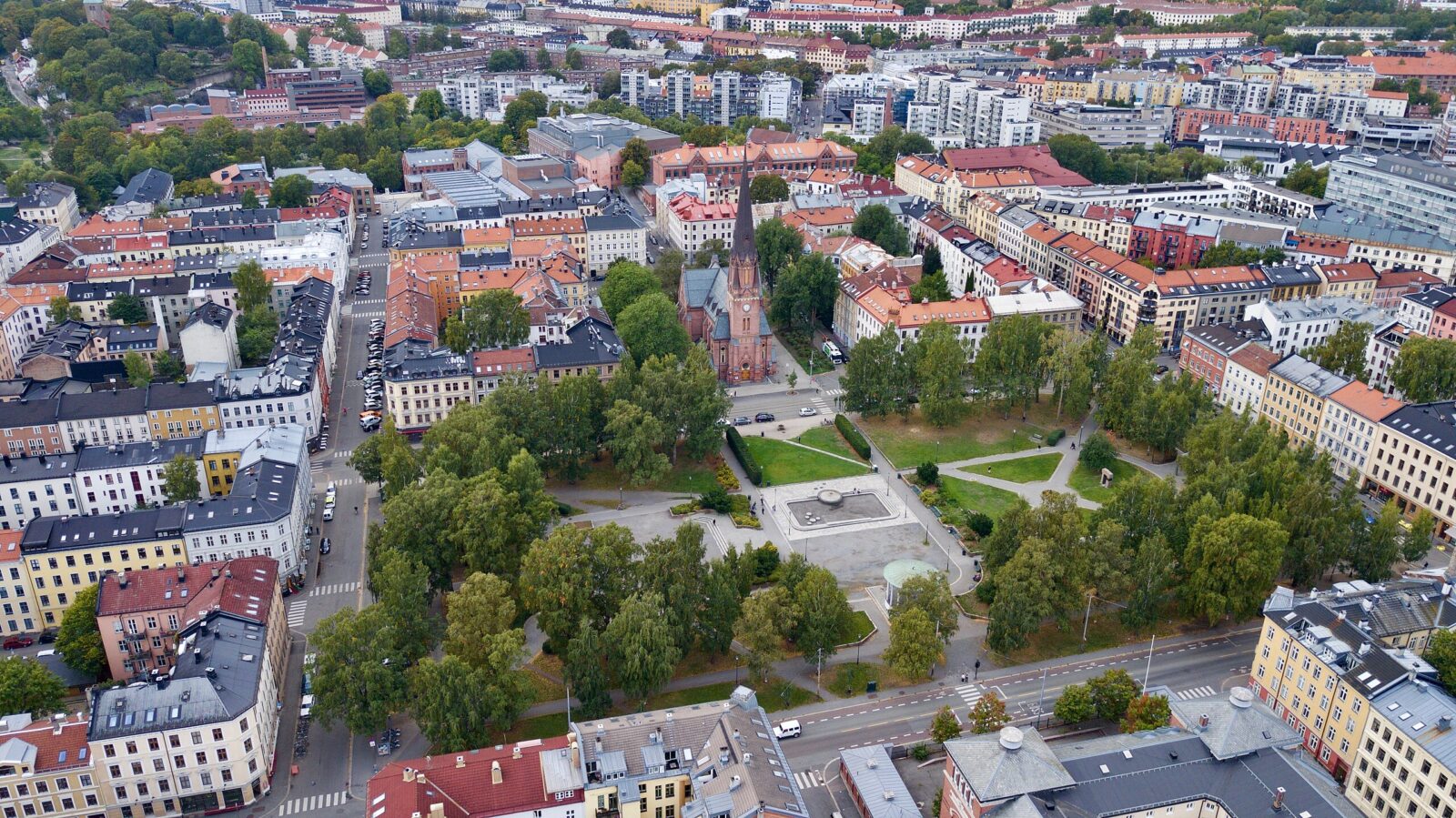
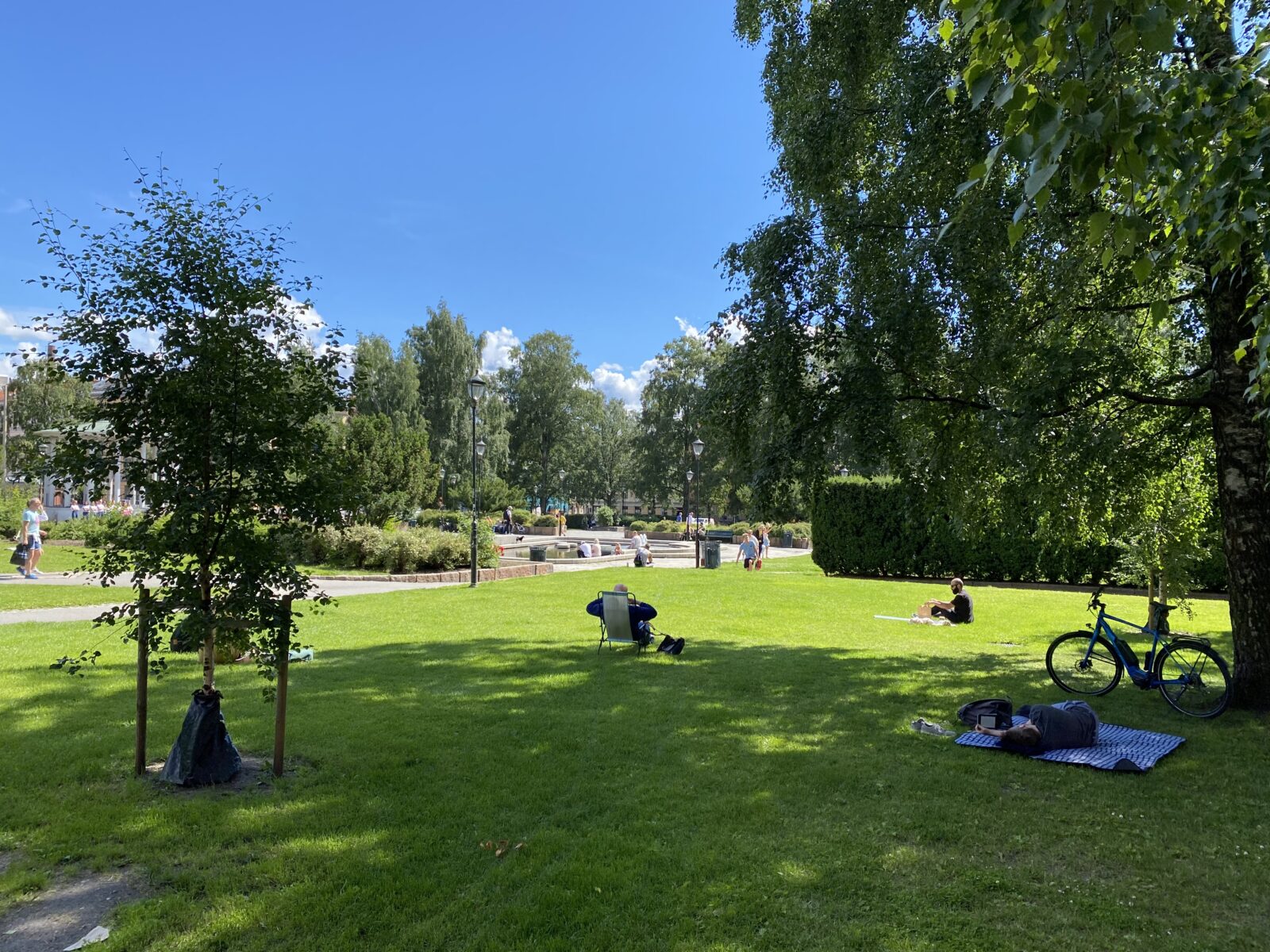
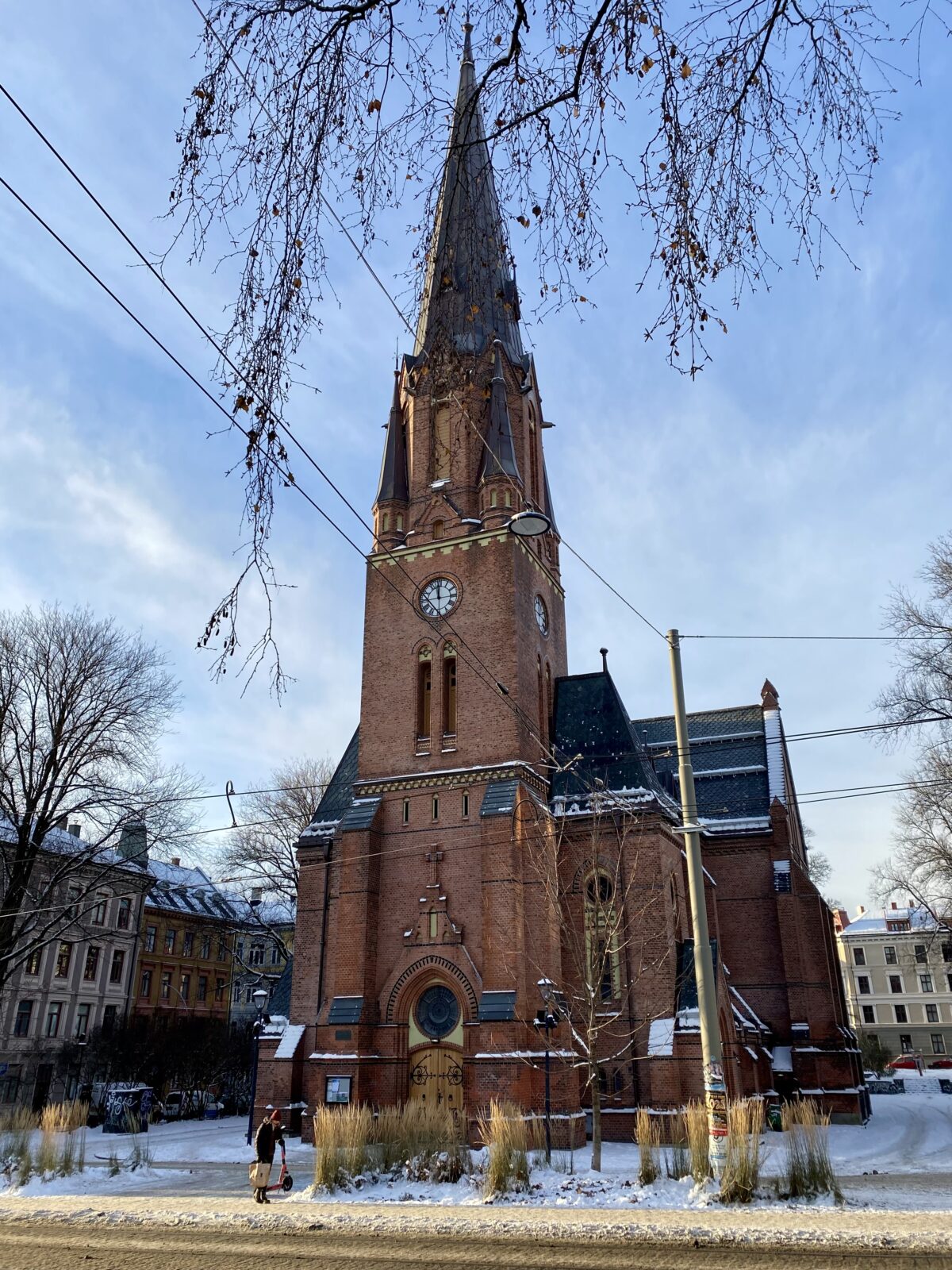
The centerpiece of the area, Birkelunden park, was given to the city by Thorvald Meyer, the real estate developer responsible for much of Grünerløkka’s appearance today. He bought much of what today is central Løkka in 1862. Plots of land were sold off to entrepreneurs to develop, with a particular condition. Thorvald Meyer insisted that the tenement buildings had certain aesthetic qualities. He also set aside large plots of land for parks, a public school, and denied the construction of factories close to residential buildings. It is certainly appropriate that Løkka’s main street is named after him!
It could have been very different
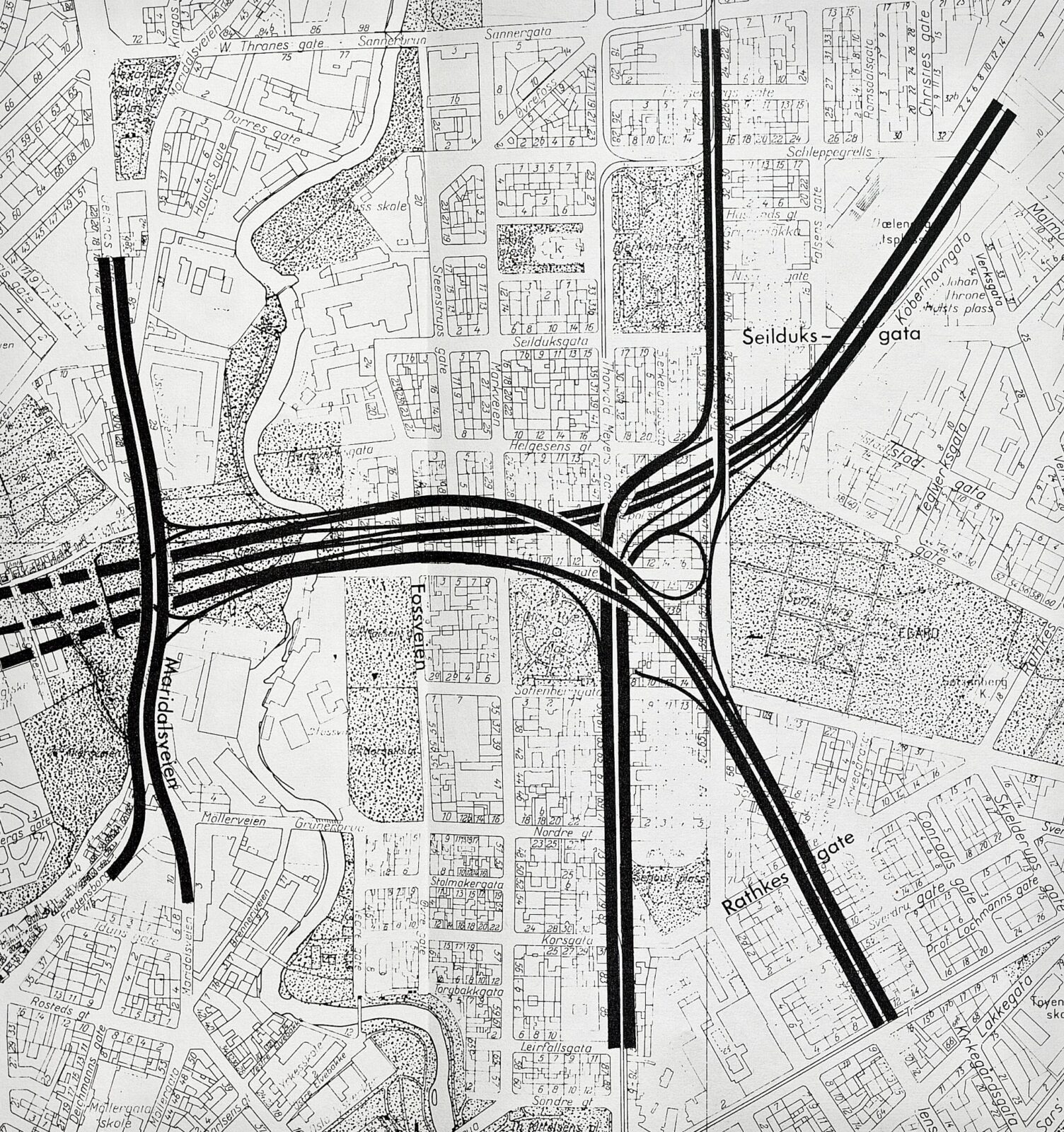
Grünerløkka today is a great example of how the past walks hand in hand with the present. The preservation and renovation of the historical district have created perhaps Oslo’s loveliest and most popular borough. But for decades, post-World War II, it seemed Grünerløkka was destined for destruction. Dilapidated housing, infrastructure from the 1800s, and the threat of complete demolition had turned Grünerløkka into somewhat of a slum.
Plans for a completely new borough were drawn up. The most extreme suggestions involved apartment buildings up to 30 stories tall and highways replacing the city streets. Thankfully, cooler heads prevailed. The urban renewal project known as «Byfornyelsen» started the revival that continues to this day.
For that is Grünerløkka – always changing, but firmly grounded in its roots. It is an ongoing process that continues to cultivate Norway’s arguably most creative neighborhood. A place that, with its long history and ability to reinvent itself, is certainly deserving of its moniker: The soul of Oslo!


